
Acne Scars Explained: Different Types and What They Look Like
Last updated on October 22, 2026
Medically reviewed by Dr. Queenie Chan | Consultant Plastic Surgeon | Last updated on August 2026
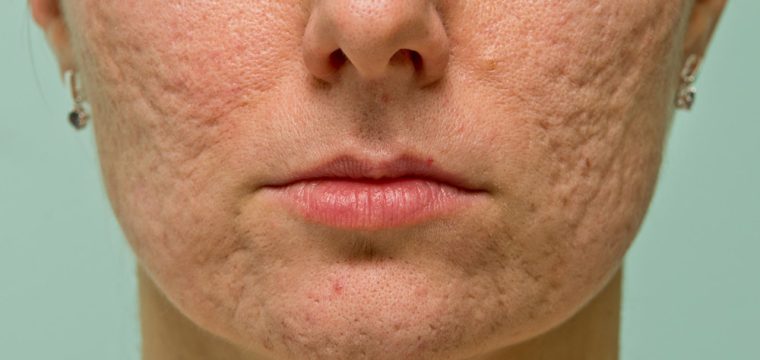
The different types of acne scars are defined by the way the skin changes after a breakout has healed. Some create small but deep openings, others leave wider depressions, and some develop as raised areas of scar tissue. Recognising these patterns helps explain why acne scarring can look very different from one person to the next.
The shape, depth and edges of a scar also affect how it appears under different lighting and how it may respond to treatment. Flat red or brown marks can remain alongside acne scars, but these colour changes do not alter the structure of the skin in the same way.
Atrophic Acne Scars: Ice Pick, Boxcar and Rolling Scars
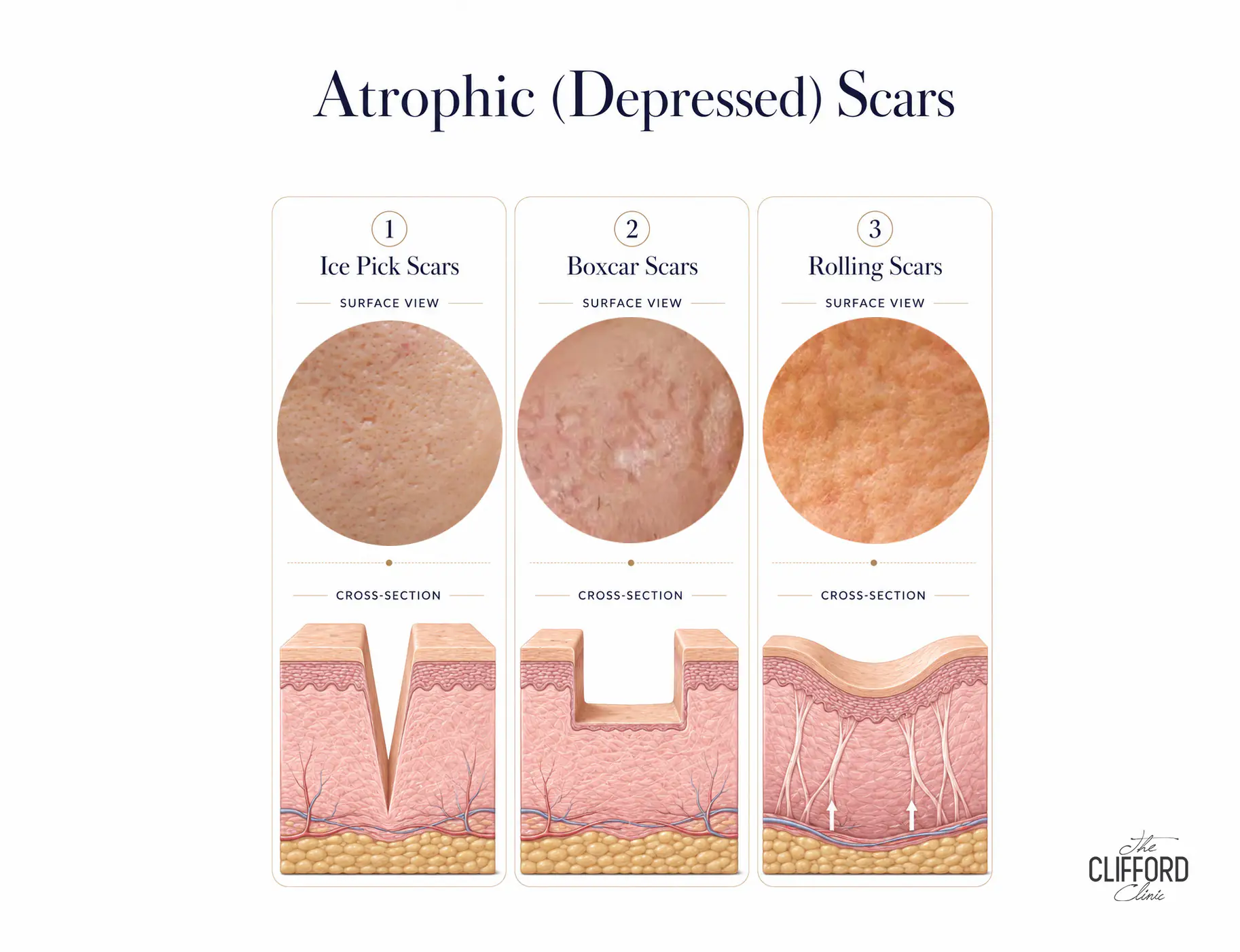
Atrophic acne scars sit below the surrounding skin and develop when the healing process does not replace enough of the tissue affected by inflammation. They account for most acne scarring and are divided into ice pick, boxcar and rolling scars according to their shape and depth.
Ice Pick Scars
Ice pick scars have a small, narrow opening and taper as they extend deeper into the skin. They may resemble an enlarged pore from a distance, but closer examination shows a sharper and more defined opening. Their visible width can underestimate their true depth, which is why surface-focused treatments may have a limited effect on this type of scar.
Boxcar Scars
Boxcar scars are round or oval depressions with relatively clear edges. They are wider than ice pick scars and may be shallow or deep, with the sides of the scar creating a distinct transition from the surrounding skin. Shallow boxcar scars can become more noticeable under overhead lighting, while deeper ones tend to cast a stronger shadow from several angles.
Rolling Scars
Rolling scars create broad, shallow dips with soft, sloping edges. Rather than looking like separate pits, they give a larger area of skin a wave-like or undulating contour. Some rolling scars are tethered by fibrous bands beneath the surface, so their appearance may change when the skin is stretched or moved.
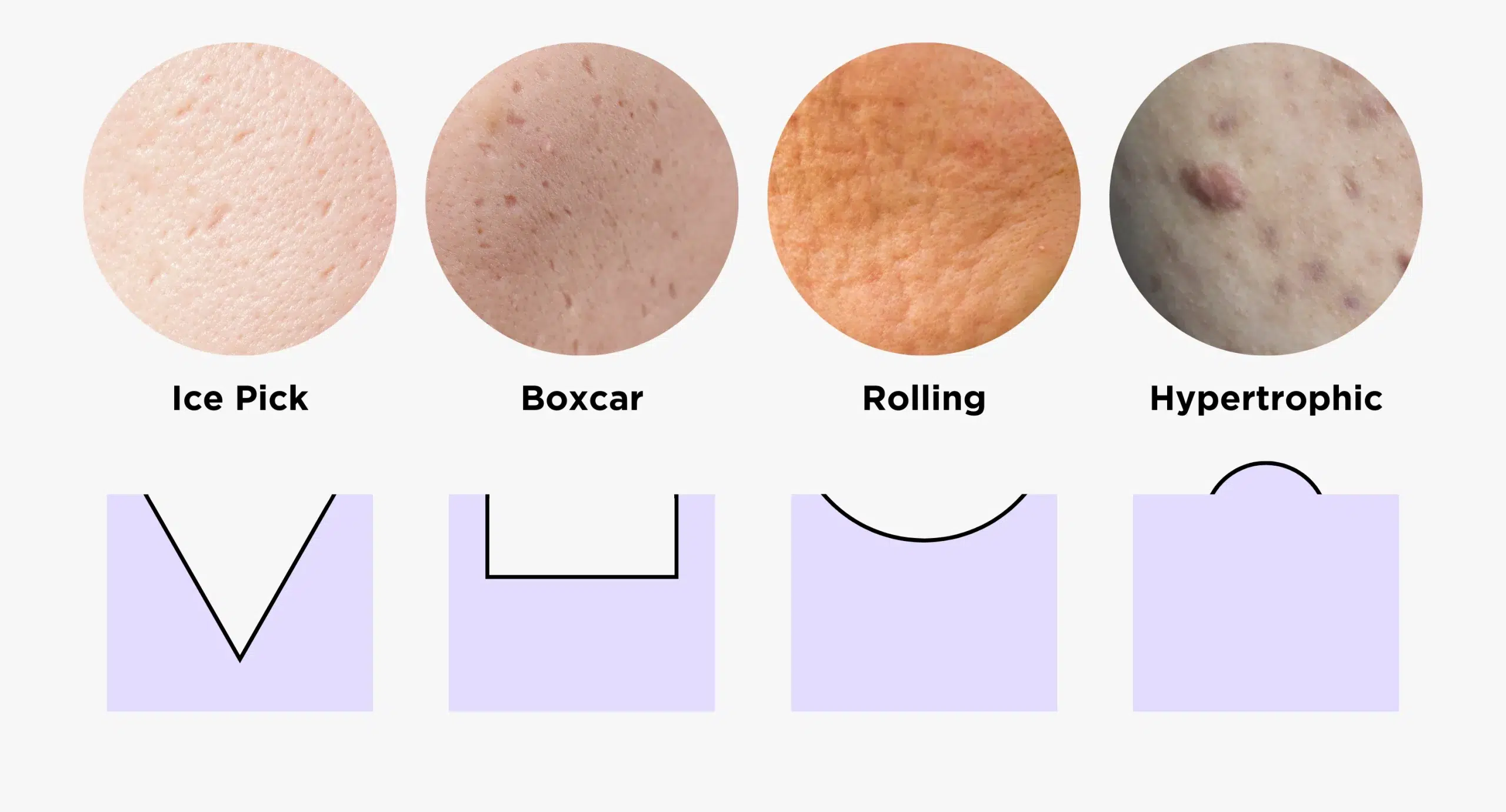
Ice pick, boxcar and rolling scars each create a different pattern of depth and contour in the skin.
Raised Acne Scars: Hypertrophic and Keloid Scars
Raised acne scars form when the skin produces excess collagen during healing. They are less prevalent than atrophic scars and can look or feel quite different, which means they need to be distinguished from depressed scarring before treatment is considered.
Hypertrophic Scars
Hypertrophic scars are firm, raised areas that remain within the boundaries of the original acne lesion. They may be pink, red or similar in colour to the surrounding skin and can become less prominent as they mature. These scars are more likely to develop after deeper inflammation on areas such as the chest, shoulders, back or jawline.
Keloid Scars
Keloid scars extend beyond the original area of inflammation and may continue to grow after the acne lesion has healed. They can appear smooth and firm, with colour ranging from pink or red to darker than the surrounding skin. Some become tender or itchy, and a personal or family history of keloids may increase the likelihood of developing them.
Can You Have More Than One Type of Acne Scar?
Several types of acne scars can develop within the same area. A cheek may contain narrow ice pick scars, shallow boxcar depressions and rolling changes in contour, while the jawline or upper body may be more prone to raised scars. One type may dominate, but mixed scarring is not unusual.
Post-inflammatory redness or pigmentation can make the pattern look more complex. These flat marks may sit between scars or over the same area, changing the overall colour without creating additional depth. Enlarged pores and active breakouts can also affect how the skin surface appears.
A clinical assessment can identify mixed scar patterns and help guide appropriate treatment planning.
Red and Brown Marks: Post-Inflammatory Erythema (PIE) and Hyperpigmentation (PIH)
Not every mark left behind by acne is a scar. Many people are left with flat areas of discolouration after a breakout settles. These change the colour of the skin but not its texture. They’re often mistaken for scarring, but they behave differently and are usually managed differently.
Post-inflammatory erythema (PIE) appears as flat pink, red or purplish marks. It comes from small blood vessels that have dilated or been damaged during inflammation. PIE is more common in lighter skin types. A useful sign is that the mark often fades briefly when gently pressed. It can settle over months, but persistent PIE may respond to vascular-targeting light or laser treatment.
Post-inflammatory hyperpigmentation (PIH) appears as flat brown, grey-brown or darker marks. It develops when inflammation stimulates excess melanin production. PIH is more common and often longer-lasting in medium to darker skin tones. It doesn’t blanch when pressed. Sun exposure can darken PIH and slow its fading, so daily sun protection is essential. Management may include targeted skincare, chemical peels or carefully selected laser settings. Aggressive treatment can sometimes worsen pigmentation, so a cautious approach matters.
PIE and PIH can sit alongside textural scars in the same area. Treating colour and texture together, or in the right order, is often part of a combined treatment plan.
Why Do Different Types of Acne Scars Develop?
The type of scarring that remains depends on the depth of inflammation and how the skin responds during repair. When tissue is lost and insufficient collagen is produced, an atrophic scar may develop. Excess collagen production can instead create a hypertrophic or keloid scar.
Several factors can influence the likelihood and pattern of acne scarring:
- Deep nodules and cysts are more likely to damage tissue than mild surface breakouts.
- Persistent inflammation can interfere with the way collagen is broken down and rebuilt.
- Picking or squeezing may increase tissue damage and prolong the inflammatory response.
- Delayed control of severe acne can allow further lesions and scars to develop.
- Genetics can influence whether the skin is more likely to form depressed or raised scars.
- The location of the breakout can affect healing because skin thickness and tension vary across the face and body.
How Does Acne Scar Type Affect Treatment?
There is no single treatment that can address every type of acne scar. Surface-focused treatments may be considered for shallow textural changes, while deeper or tethered scars can require an approach that reaches further into the skin. Raised scars need separate assessment because stimulating collagen may not be suitable where excess scar tissue is already present.
At our clinic, selected acne scars may be assessed for treatments such as RF microneedling, Morpheus8 or laser-based skin treatment. More than one approach may be considered when mixed scarring is present, although suitability and the likely degree of improvement vary with the scar pattern, skin type, active acne, previous treatment and individual healing response.
Why Identifying Your Acne Scar Type Matters
Identifying the type of acne scar matters because each pattern involves the skin differently. A narrow ice pick scar, a tethered rolling scar and a raised keloid cannot be approached in the same way, even when they appear within the same treatment area.
At our clinic, we assess the shape, depth and distribution of the scarring before recommending any treatment. This allows us to consider which options may be appropriate, explain the likely recovery and set realistic expectations about the degree and timing of any improvement.
How to schedule a consultation
To arrange an appointment, please call 02 6059 0612, contact us by email at ash.thedermalclinician@gmail.com or practicenursepip@gmail.com, or book online through our website.
Find us here:
13 Yalandra Court
West Albury
NSW 2640
Australia
FAQs
Are acne scars permanent?
True acne scars are structural changes and are unlikely to disappear completely without treatment. Their edges or colour may soften with time, but depressed and raised scars tend to remain visible to some degree.
How can I tell which type of acne scar I have?
Look at whether the scar is narrow or wide, shallow or deep, sharply edged or gently sloping, and whether it sits above or below the surrounding skin. Mixed scarring can be difficult to classify accurately, so an in-person assessment may provide a clearer answer.
Can acne scars fade on their own?
Flat red or brown marks may fade gradually because they reflect inflammation or pigment rather than a permanent loss or excess of tissue. Structural acne scars are less likely to fade on their own, although their appearance can change as the skin matures.
Are acne marks the same as acne scars?
No. Acne marks change the colour of the skin but remain flat, while acne scars create a change in depth, contour or thickness. Both may be present in the same area and can require different treatment approaches.
Who is more likely to develop acne scars?
Scarring is more likely after deep, persistent or severe inflammatory acne, particularly when nodules or cysts are present. Genetics and an individual tendency towards hypertrophic or keloid healing can also influence the type of scar that develops.
Does popping pimples cause acne scars?
Picking or squeezing can intensify inflammation, damage surrounding tissue and interfere with healing. It does not mean that every disturbed lesion will scar, but it can increase the likelihood of scarring and persistent colour changes.
Can all skin types develop acne scars?
Yes, acne scars can develop in every skin type. However, scar patterns and the risk of post-inflammatory pigmentation can differ, which needs to be considered when treatment and aftercare are planned.
How long does it take to see a change after acne scar treatment?
The timeframe depends on the scar type, the treatment selected and the way the skin heals. Treatments that rely on collagen remodelling tend to produce gradual changes over several weeks or months rather than an immediate result.
Is acne scar treatment painful?
The level of discomfort varies between treatments and between areas of the skin. Before proceeding, we explain what the selected treatment may feel like and which comfort measures can be used where appropriate.
How can I reduce the risk of further acne scars?
Bringing inflammatory acne under control and avoiding picking or squeezing may reduce the risk of additional tissue damage. Daily sun protection can also help prevent post-inflammatory marks from becoming darker, although it cannot prevent every scar from forming.

About The Author
Dr. Queenie Chan
Dr. Chan brings over a decade of extensive training and experience in Plastic Surgery, including prestigious fellowships in facial reanimation and breast reconstruction. Committed to serving her community, she has worked in disadvantaged regions across the Philippines and Cambodia, bringing essential healthcare to those in need. Now residing in rural Victoria, she continues her dedication to both her patients and personal pursuits, embodying a holistic approach to life and care.
Recent Posts

October 22, 2026
September 16, 2026
August 21, 2026
Acne Scars Explained: Different Types and What They Look Like


June 22, 2026
 Online Marketing For Doctors