
FaceTite vs Thread Lift: Which One Gives Better Tightening?
Last updated on March 25, 2026

As we age, changes in collagen, skin elasticity and facial support structures can lead to sagging along the jawline, softening of the cheeks and increased skin laxity in the lower face. Many patients exploring non-surgical face tightening treatments ask the same question: Should they choose FaceTite or a Thread Lift?
Both are minimally invasive options designed to address facial skin tightening and contour concerns, but they work in very different ways. Understanding those differences is key to choosing the right approach for your anatomy and goals.
What Is FaceTite?
FaceTite is an energy-based skin tightening procedure designed to improve skin laxity and contour in the lower face and jawline. It uses controlled radiofrequency energy delivered beneath the skin to stimulate collagen remodelling and encourage tissue contraction.
Rather than mechanically lifting tissue, FaceTite works by:
- Delivering targeted thermal energy
- Supporting collagen stimulation
- Encouraging gradual skin tightening
- Improving lower face definition
As it focuses on tissue contraction and collagen remodelling, FaceTite treatment is often considered when excess soft tissue is the primary concern, particularly around the jowls and jawline. Results develop progressively as lipolysis occurs and the overlying collagen network contracts and responds to treatment.
What Is a Thread Lift?
A Thread Lift is a minimally invasive facial lifting treatment that uses absorbable threads placed beneath the skin to reposition and support soft tissue. The threads provide an immediate lifting effect while also stimulating collagen production over time.
Thread Lift treatment typically:
- Mechanically repositions sagging tissue
- Provides structural support
- Offers subtle lifting of the mid-face or jawline
- Stimulates collagen as threads dissolve
While threads can contribute to improved firmness, their primary action is lifting without skin redraping. As a result, the lift may not be long-lasting the way a face or neck lift will be.. For patients with mild sagging, particularly where tissue descent is more prominent than loose skin, a Thread Lift may be combined with FaceTite for a longer lasting lift.
FaceTite vs Thread Lift: Key Differences
Mechanism of Action
FaceTite treatment uses radiofrequency energy delivered beneath the skin to create controlled heating within the tissue. This process is intended to remove redundant soft tissue while supporting collagen stimulation and trigger tissue contraction, which is why FaceTite skin tightening is generally discussed in the context of laxity.
Thread Lift treatment does not use energy to tighten skin. Instead, it uses absorbable threads placed under the skin to physically reposition tissue. The tightening effect comes from mechanical support and longer-term collagen stimulation around the threads as they dissolve.
Tightening vs Lifting
FaceTite is designed around tightening. The aim is gradual contraction and firming in areas where the skin has started to loosen, especially through the lower face tightening zone, including the jowls and jawline.
A Thread Lift is designed around lifting. The key outcome is repositioning, meaning tissue that has descended can be supported and elevated. This can improve contour, but it is not the same as contracting excess skin. For that reason, a Thread Lift may be described as a facial lifting treatment with secondary firmness benefits. It may also be combined with FaceTite to deliver tightening and lifting effects of both. However, if you have significant skin laxity of soft tissue descent, a face and/ or neck lift may be more suitable.
Type of Skin Concern Addressed
FaceTite treatment is typically considered when the concern is primarily soft tissue redundancy with mild skin laxity, such as early jowling, softening along the jawline, heavy nasolabial folds (smile lines) or mild loose skin that affects definition. It is often chosen when the goal is improved firmness rather than repositioning.
Thread Lift treatment may be more relevant when sagging is driven by tissue descent, for example, when the mid-face or lower face appears to have dropped and would benefit from repositioning. Threads can be useful when the lift itself is the priority, rather than treating skin laxity alone.
Gradual vs Immediate Effect
FaceTite results generally develop progressively because collagen remodelling and tissue contraction take time. This is why outcomes are often discussed in terms of improvement over weeks to months rather than immediate change.
Thread Lift results can be more immediate in terms of visible lift because the tissue is repositioned at the time of treatment. Collagen stimulation continues as the threads dissolve, which may support longer-term firmness, but the initial lift is typically seen sooner.
FaceTite and Thread Lift procedures have a direct effect on the soft tissue layers it treats and may impact on any future face or neck lift surgeries. Inform our team if you have had any previous energy based treatments or thread lifts.
Structural Impact
FaceTite works by encouraging tissue tightening within the treated area, which may help support lower face definition where the main issue is soft tissue fullness with mild laxity. It does not reposition tissue in the way that a thread-based treatment does.
A Thread Lift provides structural support by physically anchoring and suspending tissue. That support can improve contour in selected areas, but the outcome depends heavily on facial anatomy, thread placement and the degree of sagging being treated.
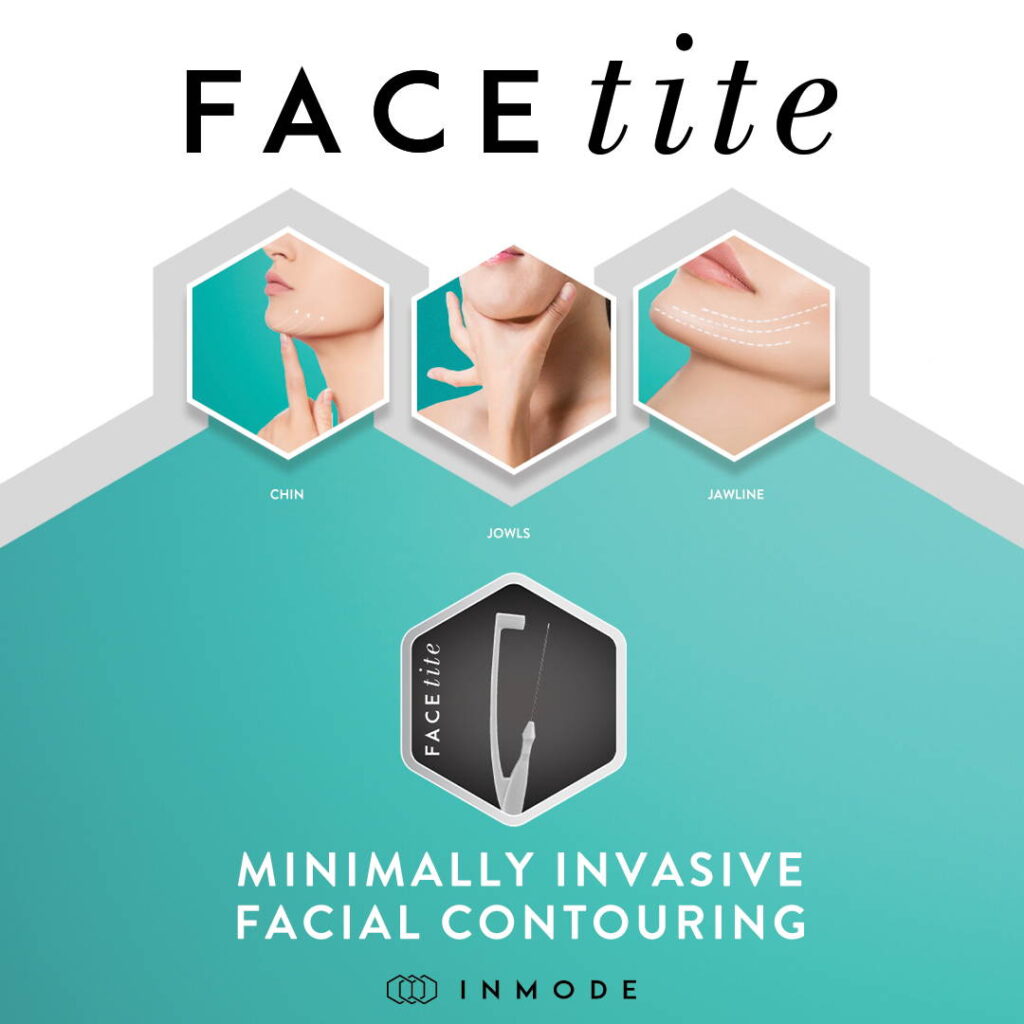
Choosing between FaceTite and Thread Lift depends on whether tightening or lifting is the primary goal.
Which Treatment Delivers Stronger Tightening?
If the question is specifically about skin tightening and controlled lipolysis of redundant soft tissues, FaceTite treatment is generally the more direct option. It is designed to deliver controlled radiofrequency energy beneath the skin, breaking down fat cells while encouraging tissue contraction and collagen remodelling to address laxity, particularly along the jawline and lower face.
Thread Lift treatment focuses on repositioning tissue rather than contracting loose skin. While lifting areas of sagging skin can create a firmer appearance, tightening occurs indirectly through structural support and collagen response. For patients whose primary concern is visible laxity rather than descent, this distinction is important when deciding which approach may offer stronger tightening.
Final Thoughts
FaceTite and Thread Lift treatments address different aspects of facial ageing. FaceTite is centred on tightening loose skin through energy-based collagen stimulation and contraction, while Thread Lift is centred on lifting and supporting sagging tissue.Combining the two treatments may be an option to provide a more powerful and long-lasting lift.
When the objective is stronger skin tightening, FaceTite generally provides a more targeted mechanism. If you have severe skin laxity, a face and /or neck lift may be more appropriate. The most suitable option, depends on individual anatomy and the specific changes being addressed, which is why personalised assessment remains essential.
How to schedule a consultation
To book an appointment, please call us on 02 6059 0612, email us at admin@eclipsehs.com or book online via our website.
Find us here:
13 Yalandra Court
West Albury
NSW 2640
Australia
FAQs
Is FaceTite better than Thread Lift for skin tightening?
FaceTite is generally more aligned with tightening loose skin, as it is designed to support tissue contraction and collagen remodelling. A Thread Lift primarily repositions tissue, so its tightening effect is secondary to lift.
What is the difference between FaceTite and Thread Lift?
FaceTite uses controlled radiofrequency energy beneath the skin to address laxity, while a Thread Lift uses absorbable threads to elevate and support sagging tissue. The distinction lies in lipolysis and contraction versus repositioning.
How long does FaceTite last compared to Thread Lift?
The longevity of both treatments varies depending on skin quality, age and the degree of laxity treated. FaceTite results develop progressively through collagen remodelling, while Thread Lift results are influenced by both mechanical lift and collagen response as threads dissolve. If you have severe skin laxity or prominent jowls and heavy nasolabial folds, a face and/or neck lift may be recommended. Our team will guide you in selecting the treatment option which is best suited to you.
Which treatment is better for jowls, FaceTite or Thread Lift?
For patients concerned primarily with loose skin along the jawline and jowls, FaceTite may provide more direct tightening. When descent of tissue is the dominant issue, a Thread Lift may help improve contour through repositioning.
Can FaceTite and Thread Lift be combined?
In some cases, tightening and lifting concerns exist together, and a combination approach may be discussed. Treatment planning depends on anatomical assessment and the specific changes being addressed.

About The Author
Dr. Queenie Chan
Dr. Chan brings over a decade of extensive training and experience in Plastic Surgery, including prestigious fellowships in facial reanimation and breast reconstruction. Committed to serving her community, she has worked in disadvantaged regions across the Philippines and Cambodia, bringing essential healthcare to those in need. Now residing in rural Victoria, she continues her dedication to both her patients and personal pursuits, embodying a holistic approach to life and care.
Recent Posts

October 22, 2026

September 16, 2026
August 21, 2026
Acne Scars Explained: Different Types and What They Look Like


June 22, 2026
 Online Marketing For Doctors